"Web 2.0" Bubble?

Maybe, but probably not. Some mostly random (but painfully organized) thoughts.

Caught between worsening CPM figures, savvy consumers and Click Fraud, companies who derive the bulk of their income from online ads might just find themselves being squeezed for cash.

Even the social networks .. the darlings of the 2.0 moment are struggling. Sure, they’re showing a lot of adverts to their huge memberships, but the folks who frequent these sites typically aren’t there to buy .. they’re there to connect. Poor CPMs? The social networks have them .. in the neighborhood of $0.40, it takes 2.5 billion impressions to earn one million dollars.

The web isn’t comprised solely of social networks and ad-funded business models .. and this is a good thing. Other features and business models are emerging at a rapid rate.

Pragmatic financiers of the VC variety are now looking very carefully at exit points before they enter into transactions with "Web 2.0" companies. Hence, deals are few and far between, and all expenses are scrutinized.

Pragmatic founders might avoid the VC discussions entirely. The decisions of "going public" (where the big exit bucks live) versus being acquired are on every VC and founder’s mind. However, due to the requirements of Sarbanes-Oxely, the costs to maintain financial disclosure for a public company are estimated at about $5 million per year .. for a company whose revenue is $50 million, that’s a big chunk of dough. Better for them to be acquired than try to grow their business and incur that kind of overhead. Penalized for growth .. imagine that!

Acquisition is a far less appealing exit strategy for VCs, who may hold sway over these decisions, encouraging founder avoidance for VC cash (for as long as they can afford it, of course .. Angel Investor, anyone?).

Facts to back up some of these bits? Glad you asked. From WSJ blogs "Afternoon Reading: Mission Critical for Venture-Backed IPOs" you’ll read:

The second quarter saw zero venture-backed companies go public–the first quarter in more than 30 years without a venture-capital-backed initial public offering in the U.S. And it follows a lackluster first quarter, when only five such firms went public. Now compare that to the first half of last year, when 43 venture-backed firms went public, according to this Washington Post article reporting on a study by the National Venture Capital Association and Thomson Reuters.

Overall momentum in technology isn’t lost, however. The market appears to be moving toward a "smaller success" model, where more realistic goals are set, growth is managed to cash flow and literally hundreds of companies can chase the same feature opportunity. Thanks to low cost-of-entry, these companies can survive longer, creating a "thickening" of the Web 2.0 bubble.

Business runs in cycles, with booms following busts following booms. Nowadays, this is happening in Internet time, and in many cases, through the release of a new technology or the discovery of a feature / paradigm that can be monetized. Further, booms for a particular feature may overlap booms for related features, creating a "rolling boom" that keeps interest levels high.

Greed and the perception of opportunity fuels a boom, while the fear of of an opportunity loss throws gasoline on the fire. Fear comes in another form though, a form that causes a founder to well, founder .. continually monitoring progress (or lack thereof) questioning their business plan. A high level of market research, common sense and pragmatism, coupled with fiscal discipline is very handy as a boom starts to age. A well-planned exit / stop loss strategy is handy as well; including considerations for merging, selling out or shutting down.

There’s good news here as well. It is far less expensive to launch a Web 2.0 company today than it was back in dot-com days. Capital needs are far lower, thanks to the plethora of sky and cloud services, which are available at little or no cost to start up companies. Start-ups deploying into these highly-commoditized infrastructures enjoy immediate visibility on the web, potentially unlimited scalability and a cost-to-operate model that suits minimal cash flow. Founders and VCs can make a larger number of smaller bets when chasing an opportunity.

What about new business models? I’ve seen an interesting social network tangent emerging .. the rise of product-based social networking, where consumer companies use the social networking paradigm to promote their products to like-minded consumers .. also for brand awareness (not the same as advertising) .. or both. More on this as it develops.

Location awareness is potentially huge .. and potentially intrusive (and therefore, annoying). Imagine a coupon in a text message because a system knows you’re near a Gap or a Starbucks. Creepy (but saving cash is fun!). I’m watching this too.

Twists on old business models? Sure. Subscription-based models are proven only with the most fanatic / devoted / sole-source audiences (think World of Warcraft or Major League Baseball) or to services deemed critical to security / LoB (think OneCare or SalesForce). Maybe there’s a consumption-subscription hybrid working out there (stream x hours of content for a set fee, with additional y costing only z). A few years ago, we were fighting micropayments: a small enough charge that would provide no barrier to entry to making a small purchase ($0.99 per song on iTunes, or a copy of USA Today online) .. that seems to have sorted itself out. What else is waiting in the wings?

So, bubble? Not likely.

There are a huge number of really smart folks looking at extending existing business models in ways that take advantage of new web-based features and social interaction. Add a low cost of entry and there should be enough boom for us all.
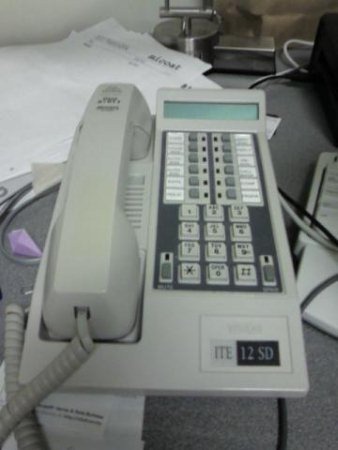
My office phone just died ..

.. I’m thinking of loneliness.

DeadOfficePhone20080806I don’t spend a lot of time here, and I think it misses me.

Picking up the handset awakens the display .. just for a moment.

.. as if in the hopes that I might put it to use.

After hanging up, it goes back into a dim-screened funk after a few seconds.

R.I.P., poor phone.

Tracking Movement and Progress via Bluetooth

Bluetooth signals emanating from laptops and cell phones could provide an opportunity to monitor how long it takes vehicles and pedestrians to travel from one point to another. The information would be most useful in tracking the speed of a commute, or progress through airport security lines.

Once tracked, a real-time feedback could be established to respond to delays:

  • TSA personnel could be reassigned to trouble spots to improve traveler progress through security.
  • Additional entry gates could be opened to handle unexpected loads in an airport.
  • Police or tow trucks could be dispatched to delayed regions on highways.

The monitoring would likely require a disclaimer in our litigious society ("The xyzzy org is monitoring your radio transmissions to improve service. At no time is your cell phone or wireless device data compromised."). A system need not glean any more than a unique ID of the transmission (versus actually accessing data) and track the location of that ID through a facility / traffic flow.

Of course, over-responsive wireless devices (those set in ‘discovery mode’) might alert their user, creating nothing less than a security panic for the (rightfully, in these digital daze) paranoid.

Music is Life

This is a great Zune spec spot on YouTube: "Music is Life".

As lovely as it is .. would YOU put the earphones back in your ears? 😛

What does Social Portability Mean?

To privacy? It’s (a copy of) your personal data (that you chose to share), after all.

To advertising revenue? Social sites make cash from eyeballs who visit to see what you’ve shared.

The jury is still well out on this, but since MySpace announced their data portability initiative, Facebook and Google  have responded on how they would offer to share access to your data.

Let me clarify: I see this as social, but not really "portable"; it’s more like "accessible": where a user can define to what other networks their data could be referenced and / or shared. webmonkey comments on this in "How MySpace Plans to Become Everybody’s Space".

I don’t see any of the sites releasing (or transferring) the data; it’s either a pointer to, or a copy of some of the data between sites. In the MySpace case, access to data is granted by the user, but the API looks to be a pointer to the data than release of the data. ClickZ comments: ".. MySpace Unveils Data Portability Project" (part of a larger article).

Per Wired, Facebook isn’t too keen about releasing control of your data, in "Facebook, Google Square Off Over Who Controls Your Data (Hint: It’s Not You)".

I don’t think we’ve heard the last of this.

June 14, 2011 Update: We haven’t. Most everything discussed in these articles has happened .. although by Facebook and not MySpace.

Auto-Dialers and Call Abandonment

You’ve likely had this experience (or am i the only lucky one?):

  • A call comes in on my cell phone with "restricted" or "unavailable" where the number should be. I pick up and after a brief silence, there is no one on the line and the call disconnects.
  • Some time later, another call comes in whose number is similarly blocked. I pick up and after a brief silence, I am speaking with a live person, soliciting for one thing or another.

I’m guessing these events are related, and the function of some boiler room auto-dialer that rings number after number, connecting the next available operator to the victim.

Have you seen this? What is your experience?

We are sorry to disturb you ..

Heard this on my phone when I picked up a call this past week.

We are sorry to disturb you .. but this message was intended to be picked up by answering machine.

What’s up with that?

Secrets of Absinthe .. Revealed!

Excellent timing on this subject .. this just came up in a discussion with a good friend.

No, I’ve not tried it yet (nor do I have that in my near-term plans), especially after what I’ve learned.

According to Tucker Max, Absinthe is "brewed from the urine of Lucifer" (from "I Hope They Serve Beer In Hell"), which prompted me to do a Search to see how it’s made.

Absinthe is a alcoholic spirit (as it has no added sugar during distillation, which would make it a liqueur). It is distilled from the flowers and leaves of the Wormwood plant.

Right off the bat, that doesn’t sound so good, now does it?

Some other fun facts:

  • Absinthe is rumored to have psychotropic properties, although this has not been proven.
  • It is illegal to buy or trade in The States.
  • It is typically served over ice, with added sugar.
  • It’s nickname is "the green fairy", of which we had a glimpse in Baz Luhrmann’s "Moulin Rouge".

van Gogh purportedly drank it to enhance his creativity. The alleged affects can certainly help explain why he "lost" an ear.

There’s more. MSNBC publishes "Absinthe’s Mind-Altering Mystery Solved".

Hitchhiker’s Guide to the Galaxy Game Online

Back in the 80s there was Zork (see "Attention Adventurers!" for versions you can download and play offline), an amazing text-based adventure from InfoCom. of course, with the graphics revolution that made 3D worlds and FPS games the norm, these games didn’t hold the attention of the masses.

They games are pretty cool, though .. and anyone who loves to read will enjoy them; they’re quite like an interactive book.

The Hitchhiker’s Guide to the Galaxy series didn’t miss out on the interactive gaming experience. "THE HITCHHIKER ADVENTURE GAME by Douglas Adams – 20th Anniversary Edition" can be found on the BBC site.

The Pink Dice

It was back in 2005 that I blogged "Vegas Vacation Recap, Part 4 – The Pink Chip" (along with four other articles from the same Vegas trip). The thing that made that vacation unique was my receipt of a pink ($500) chip instead of 5 black ($100) chips in a "color out" (combining lower-value chips for bigger-value chips) when leaving a craps table.

Well, my pink adventures are certainly not at an end.

On my last trip, I found myself in Bill’s Gambling Hall (for you Vegas old-timers, it used to be the Barbary Coast, and for you Vegas aficionados, it’s owned by Harrah’s). I was playing Craps at a $5 table (my usual pastime and level) and, for some reason, raised the ire of a boxman (the guy who sits across from the guy with the stick) because I wasn’t hitting the far wall when throwing the dice.

Note to Craps noobs: the house does want you to throw the dice with sufficient "style" to hit the far wall, to ensure a random bounce. I wasn’t doing this intentionally, and certainly did hit the wall as often as I can remember, but, no matter.

After two warnings (I was busily collecting winnings at the time), the guy reaches into his pocket and pulls out two tiny pink dice, explaining to me that if I lacked the strength to reach the far wall, I could use these .. the ladies’ dice; he went to great pains to describe these akin to the ladies’ tees on the golf course.

Of course, it cracked the table up (myself included), and I promised to do better. The next few throws went over the far wall (again, not my intention), which was more than enough fun for the evening.